

FIELD GUIDE · MATERIAL PLANNING
Plan the right amount of gravel before delivery day
A practical guide to measuring a driveway, choosing the depth from your project specification, estimating cubic yards, and accounting for a sensible placement allowance.
Start with the area and the specified finished depth
To estimate gravel for a driveway, measure the area you plan to cover and use the finished layer depth shown in your design, installation plan, or supplier guidance. The basic volume calculation needs length, width, and depth. It gives you a planning quantity in cubic yards; it does not determine what driveway depth is right for your soil, drainage, traffic, or local conditions.
For a driveway with more than one material layer, measure and calculate each layer separately. A compacted base and a finer top layer may use different aggregate, depths, and supplier specifications. Combining them into one average can make the order harder to check.

Driveway image: Sierra Lopez / Unsplash.
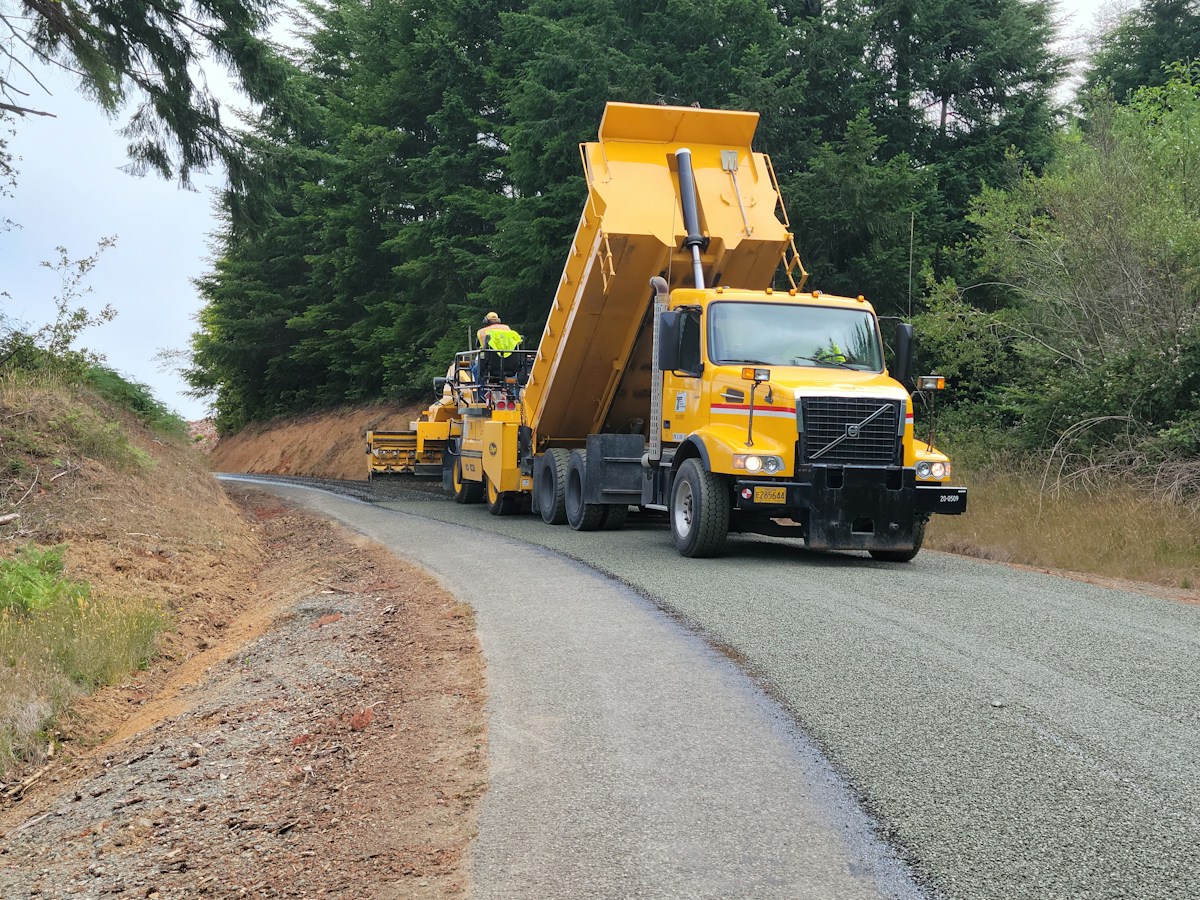
Aggregate road image: Tom Shamberger / Unsplash.
The cubic-yard formula
Base volume (yd³) = length (ft) × width (ft) × depth (in) ÷ 12 ÷ 27
Dividing depth by 12 converts inches to feet; dividing cubic feet by 27 converts the result to cubic yards. If you add a placement allowance, calculate it separately: planning volume = base volume × (1 + allowance percentage ÷ 100). Keep every measurement unit consistent.
This is a volume estimate, not a tonnage estimate. Aggregate weight varies by rock type, grading, moisture, and how the supplier defines loose or compacted material. Ask the supplier for its current conversion factor before ordering by weight.
How to estimate the quantity step by step
Step 1: Split the driveway into measurable sections
Measure length and width in feet for each rectangular section. For a curved or tapered driveway, divide it into smaller shapes you can measure, or use a reliable area measurement and calculate each material layer on its own.
Step 2: Confirm the depth for each layer
Use the specified finished depth, in inches. Do not treat a general online example as a design recommendation. The correct build-up depends on the site, subgrade, drainage, intended traffic, aggregate, and local requirements. Confirm the planned depth with your project documents or contractor.
Step 3: Calculate base volume
Multiply length by width by depth, then divide by 12 and by 27. If you have separate areas, calculate each one and add the cubic-yard results. Keep a short note beside each result so you can trace it back to a section of the plan.
Step 4: Add the allowance and check supplier units
Apply only an allowance that fits the job and the supplier’s ordering method. The allowance helps with placement variation and small losses; it does not replace a compaction or engineering factor. Confirm whether the quote is for cubic yards, tons, or another unit.
Worked examples
20 ft × 10 ft at 4 in
Base volume: 20 × 10 × 4 ÷ 12 ÷ 27 = about 2.47 yd³. With a 10% example allowance, the planning quantity is about 2.72 yd³.
12 ft × 10 ft at 6 in
Base volume: 12 × 10 × 6 ÷ 12 ÷ 27 = about 2.22 yd³. With the same example allowance, plan for about 2.44 yd³.
These rounded examples show the math only. Replace them with your measured dimensions and approved layer depth before you request a quote.
Field notes that help prevent ordering mistakes
Measure finished coverage, not just the visible low spots. Record the areas and layer depths separately, note slopes or unusual edges, and verify how the supplier treats compaction and delivery quantity. For multiple sections, check the total once by hand before placing the order.
If the result looks unexpectedly large, check that depth was entered in inches and then divided by 12. If it looks too small, confirm that you did not omit a section or layer. A cubic-yard result cannot be reliably changed into tons without an appropriate material density.
Turn your measurements into a clear order estimate
Enter the driveway dimensions, depth, and allowance to get a consistent cubic-yard planning figure. Then confirm the material and order unit with your supplier.
Frequently asked questions
How deep should gravel be on a driveway?
There is no single depth that fits every driveway. The design depends on the ground, drainage, traffic, aggregate, and whether the work is a resurfacing or a new layered build. Use the approved plan or get site-specific advice before ordering.
Does this estimate tell me how many tons to buy?
No. It estimates volume. Ask the supplier for the current density or cubic-yard-to-ton conversion for the exact aggregate and moisture condition you are buying.
Should I include compaction in the allowance?
Do not apply a generic compaction factor without confirming the project and supplier method. Compacted depth and loose delivery volume can differ; follow the project specification and supplier guidance.
How do I calculate an irregular driveway?
Break it into simple sections you can measure, calculate each section separately, and add the volumes. For a complex layout, use a verified area measurement and check it against the plan.
What should I confirm before ordering?
Confirm the material grade, finished depth, quantity unit, delivery minimums, and whether the supplier’s figure is loose or compacted. Keep the estimate and assumptions with your project notes.
Further reading
For additional road-aggregate planning context, see Penn State’s Driving Surface Aggregate Handbook and the FHWA Gravel Roads Construction and Maintenance Guide. Follow the specifications that apply to your own site.
Construction conditions and local requirements vary. Confirm important quantities and specifications with your drawings, supplier, and qualified local professional.